Enterprise Process Digitization Across Core Systems
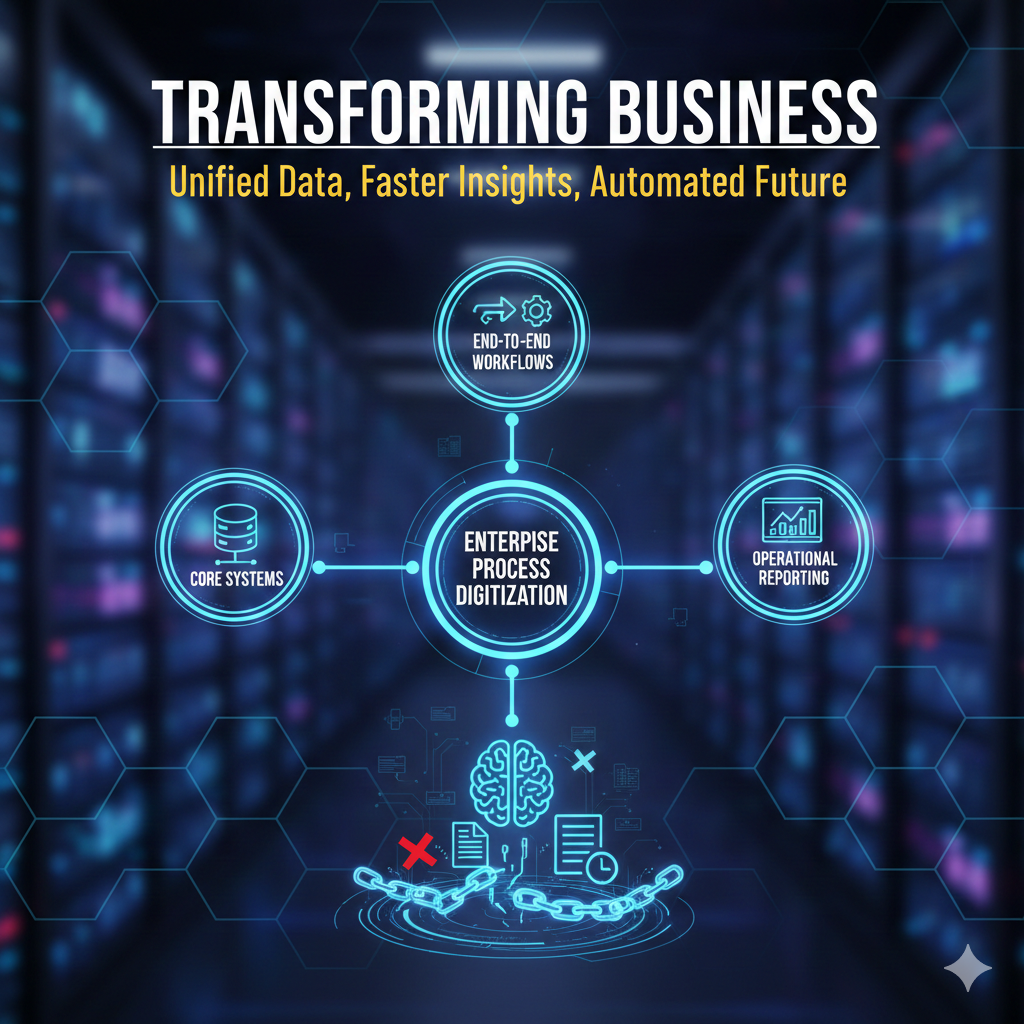
The organization had fragmented processes across multiple core systems and manual handoffs. Reporting was slow and inconsistent. The goal was to digitize end-to-end workflows, improve data quality, and create reliable operational reporting.
Client Type
Large Regulated Enterprise
Region
Global
Engagement Type
Cross-Enterprise Modernization
Duration
12–18 months
Role
Program delivery lead for integration, workflow digitization, and reporting governance
What We Delivered
- Digitized workflow across 4–6 core systems with standardized handoffs
- Integration layer to reduce point-to-point dependencies and improve change safety
- Automated reporting for operational KPIs with data validation checks
- Role-based access model and audit logs for key workflow steps
- Governance framework: change control, release cadence, and production support model
How We Delivered
- Mapped 'as-is' process with business owners; removed low-value steps first
- Created a canonical data model for shared entities to reduce reconciliation issues
- Built integration contracts with versioning to prevent breaking changes
- Implemented automated data quality checks and reconciliation routines
- Set up weekly steering reviews for risk, scope control, and dependency management
What Made It Hard
- Multiple system owners with competing priorities; required firm governance
- Data inconsistencies across systems; required canonical model + reconciliation
- Operational constraints: limited downtime windows and strict change control
Results and Impact
Process Efficiency
Reduced end-to-end process cycle time by ~20–35% for prioritized workflows. Cut manual handoffs by ~30–45% through workflow automation.
Data Quality & Reporting
Improved data completeness from ~92% to ~97% on key operational entities. Reduced time to produce weekly operational reports from ~2 days to <4 hours.
Release Stability
Stabilized release management: predictable cadence with fewer emergency fixes.